

Spanish Style Carport: Mediterranean Charm in Your Florida Home
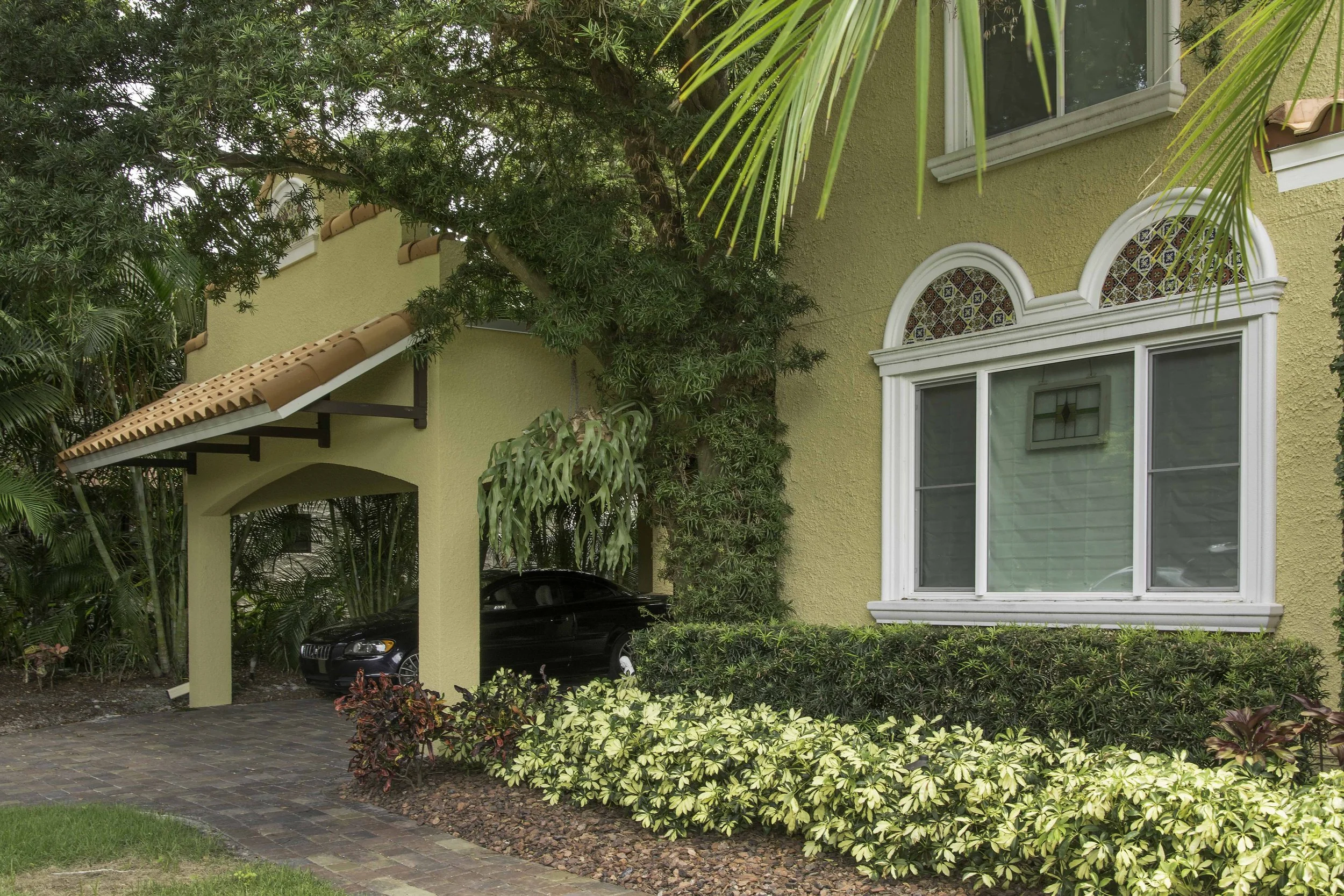
A Spanish style carport does more than shelter a car. It carries the story of an entire architectural tradition, one that began in Spain and evolved as it crossed the Atlantic during the Spanish colonial era, taking root in homes across the Americas. That history shows up in every detail: the warm stucco walls, the terracotta tile roof, the wrought iron accents, and the custom tile work that turns a functional structure into a piece of craftsmanship. The result is a style built for warm climates and relaxed living, and it is easy to see why Tampa and St. Petersburg homeowners keep choosing a Spanish style carport as one of the most beautiful ways to bring Mediterranean character to the front of a home.
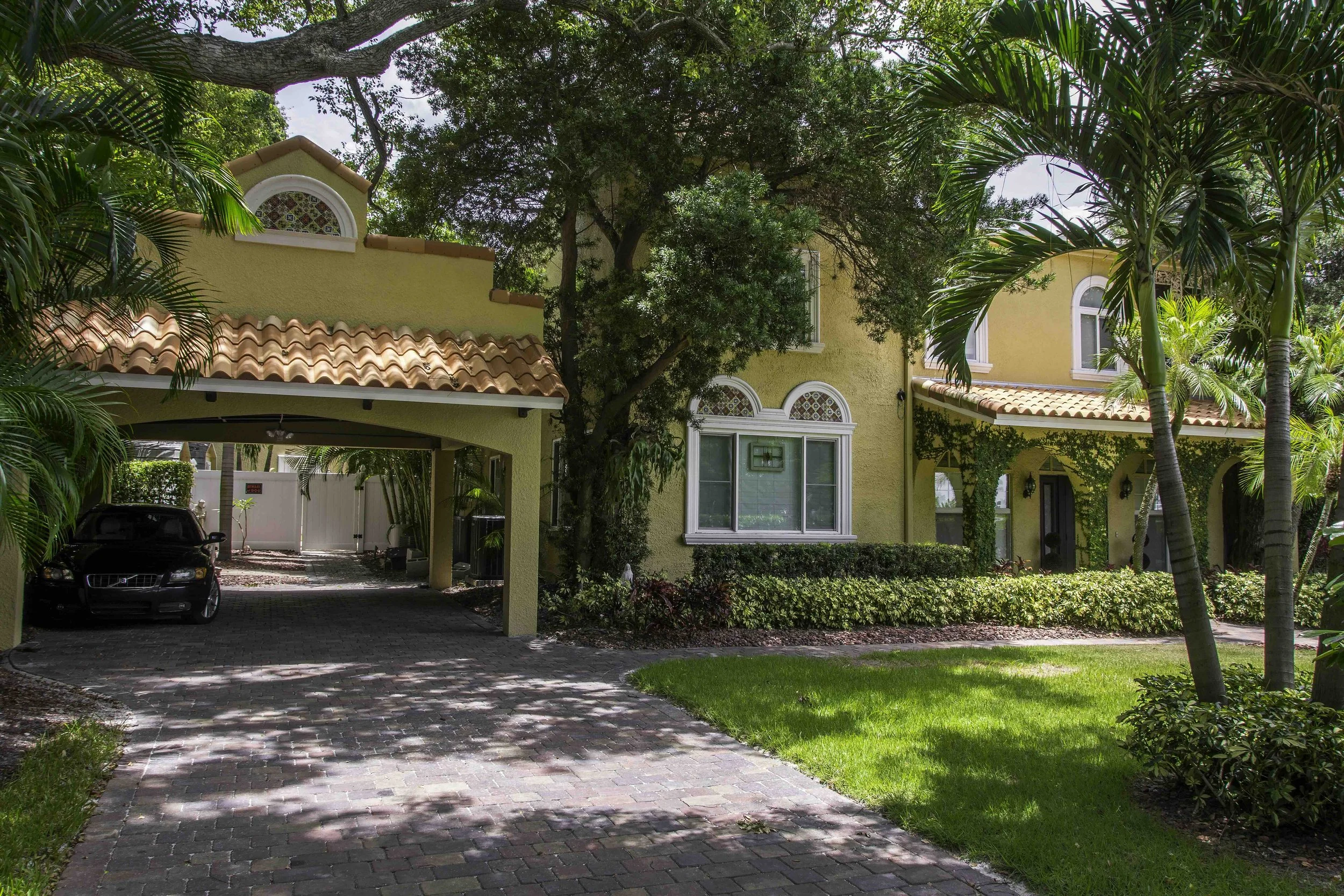
Spanish Style Carport: Stucco for Florida's Climate
The stucco exterior is one of the most recognizable features of a Spanish style carport, and it is also one of the most practical. Finished in warm, earthy tones, from soft creams to sun-baked terracotta hues, stucco gives this Spanish style carport a smooth, sculptural appearance that pairs naturally with the rest of the home. The material can be applied in a variety of textures, from a lightly hand-troweled finish to a completely smooth surface, giving homeowners room to match the exact character they want.
Stucco also performs well in hot climates, which is part of why it has remained a staple of Spanish architecture for so many centuries. The walls provide natural insulation, helping keep the space beneath the carport cooler during the day and reducing the amount of heat that radiates into the structure during Florida's long summers. Unlike siding materials that fade, warp, or need frequent repainting, stucco holds its color and shape for decades with minimal upkeep. A well-finished stucco exterior still looks relevant and elegant twenty years after installation, which is exactly why it remains a defining choice for any Spanish style carport today, and one of the easiest ways to give a home instant curb appeal.
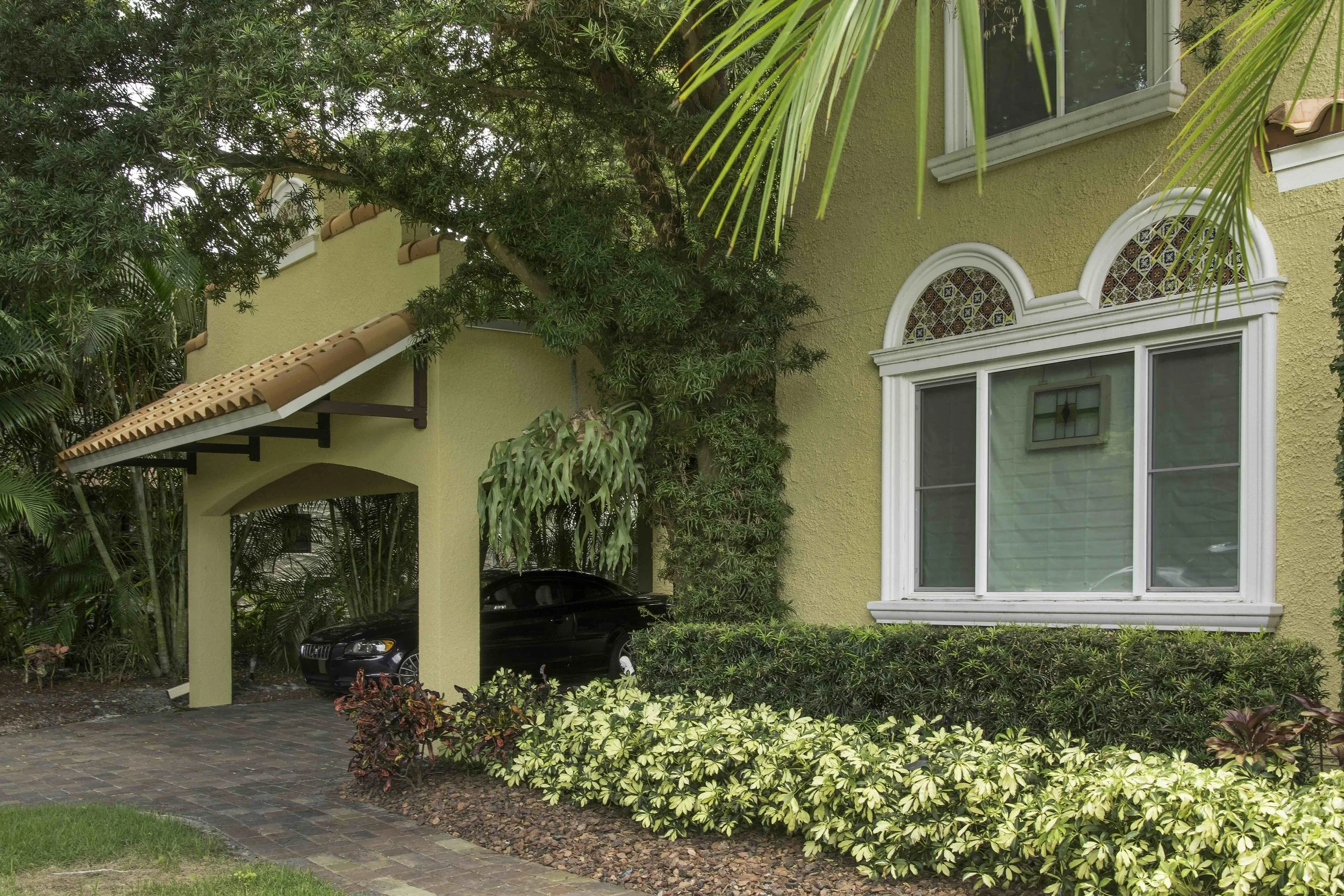
Terracotta Tile Roofs That Define the Look
No feature says Spanish style carport louder than a terracotta tile roof. The low-pitched, barrel-shaped clay tiles are the most recognizable element of the style, instantly identifiable even from a distance, and they are as functional as they are beautiful. Each tile is curved to interlock with the next, creating a rolling wave pattern along the roofline that catches the light differently throughout the day.
That shape is not just for looks. Terracotta tiles shed rain efficiently, channeling water off the roof quickly during Florida's heavy summer storms, and the airspace created by the curved profile helps keep interiors cool by allowing heat to escape rather than settle against the structure. Clay is also naturally resistant to rot, pests, and fire, which makes it a smart long-term investment for a climate like Tampa's. Durable enough to last well beyond fifty years with basic maintenance, a terracotta roof is often the first detail people notice on a Spanish style carport, and it sets the tone for the rest of the design before a visitor even reaches the front door.
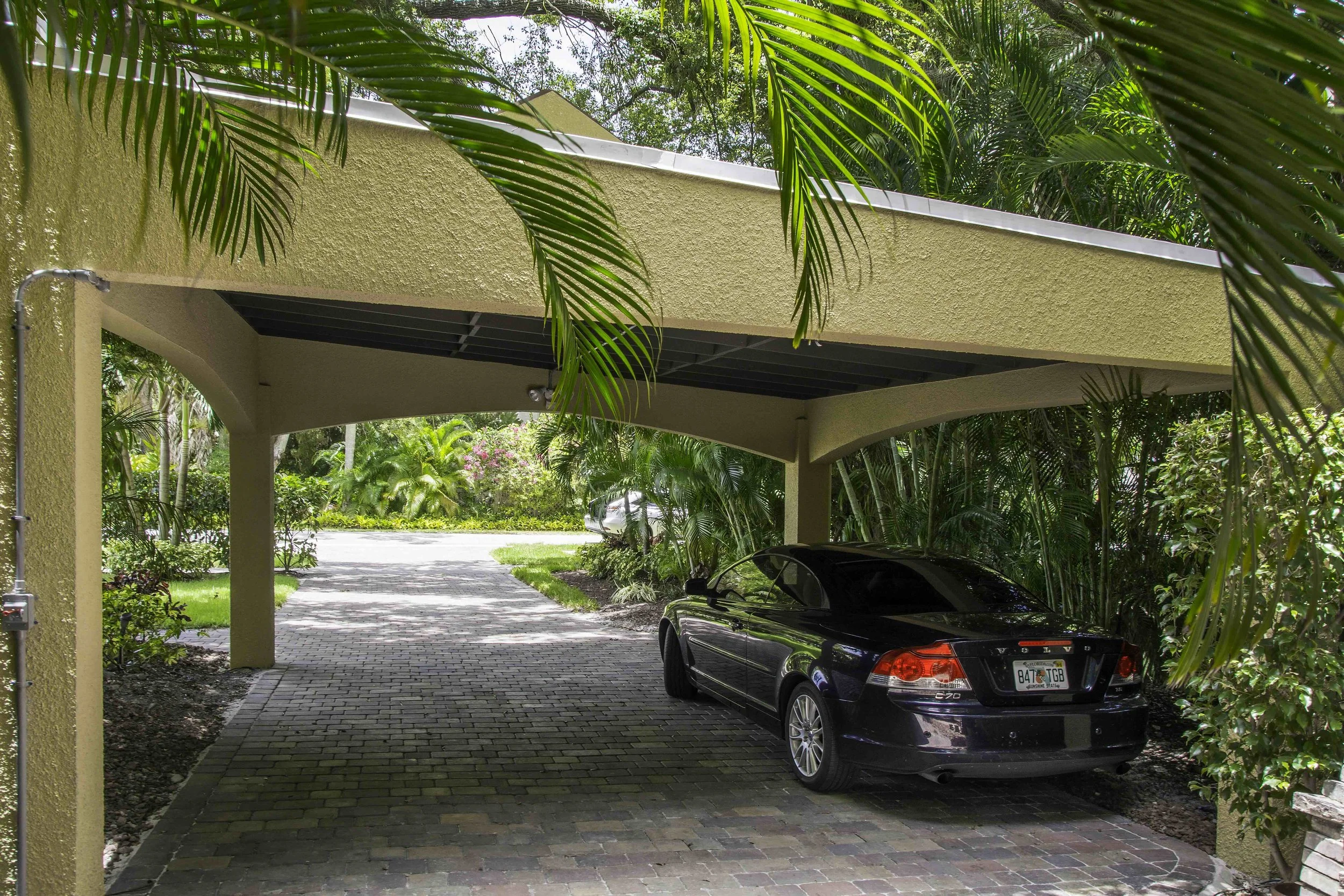
Arched Openings and Wrought Iron Craftsmanship
Deeply set arches and curved entryways give a Spanish style carport its distinctive silhouette, a nod to the Moorish influences woven into Spanish Mediterranean design centuries ago. Rather than a flat opening, the archway is recessed into the structure, creating depth and shadow that make the carport feel substantial rather than tacked on. The curve of the arch is often echoed elsewhere on the home, in a doorway, a window, or a covered walkway, tying the carport visually to the rest of the property.
Paired with heavy wrought iron accents on grills, light fixtures, and gate hardware, these arches turn a simple carport into a genuine display of craftsmanship. Iron detailing can be as simple as a scrolled bracket supporting a lantern or as elaborate as a full decorative grill covering a side opening. Because ironwork is handmade, no two designs need to look alike, which gives homeowners another opportunity to personalize the space. Every element, from the curve of the arch to the weight and pattern of the ironwork, works together to create something that feels intentional and enduring rather than incidental.
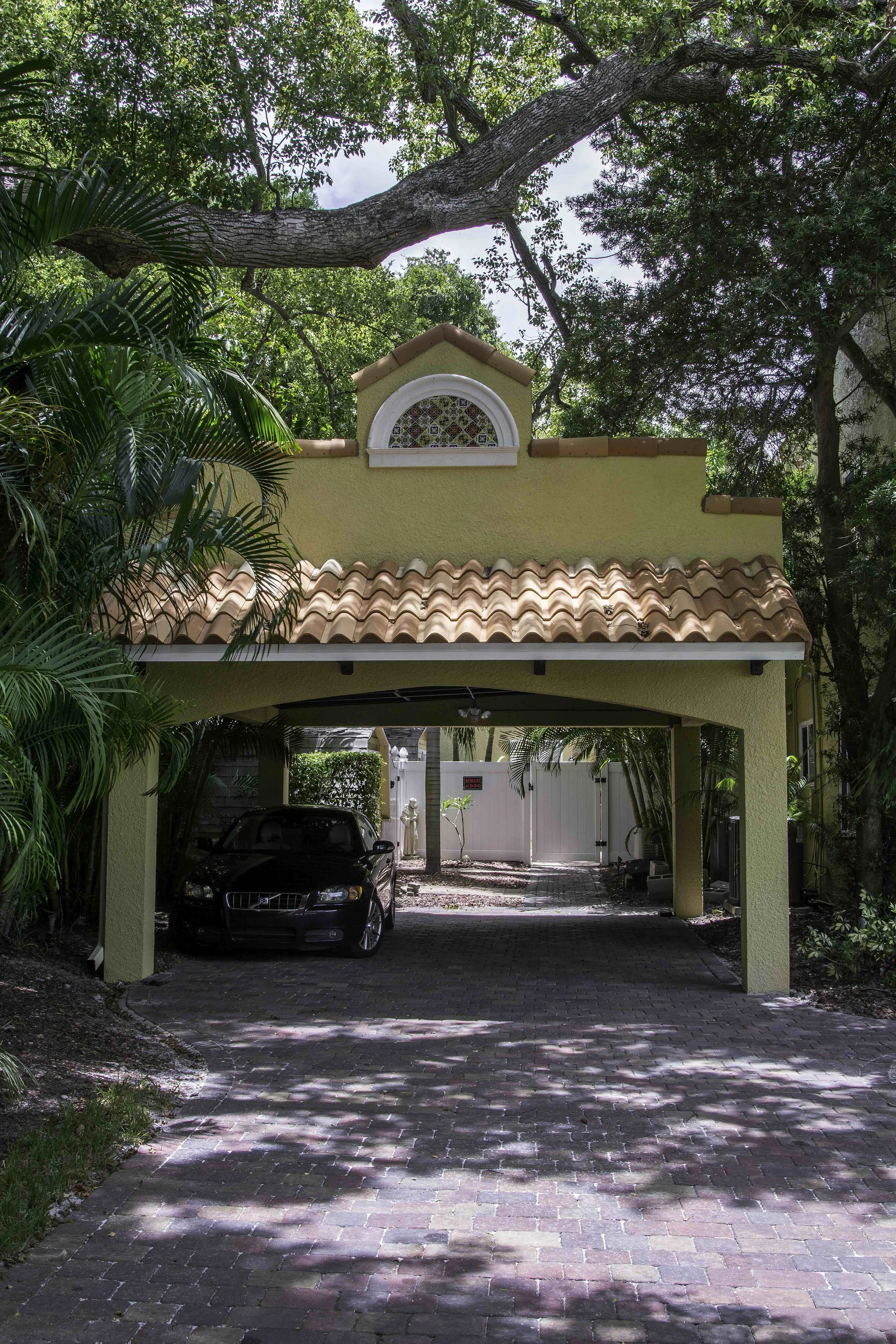
Custom Tile Work for a Personal Touch
One of the most underrated features of a Spanish style carport is the decorative tile work. Hand-painted or patterned tiles can be worked into archways, columns, stair risers, or accent panels, giving homeowners the chance to go fully custom with color and pattern. Traditional Spanish and Talavera-style tiles often feature deep blues, yellows, and reds in geometric or floral motifs, but the palette can be adjusted to complement any home's existing colors, from muted earth tones to bolder jewel tones.
Because tile work is applied selectively rather than across an entire surface, it gives homeowners a way to add personality without overwhelming the design. A single tiled column or an inset panel above the archway is often enough to make a strong statement. This is where a Spanish style carport becomes personal, reflecting the homeowner's taste while staying true to the architectural roots of the style, and it is frequently the detail that guests remember most after the terracotta roof and the ironwork.
Indoor-Outdoor Living, Florida Style
Spanish Mediterranean homes have always placed a strong emphasis on indoor-outdoor living, and a Spanish style carport extends that philosophy right to the driveway. Rather than treating the carport as a separate, purely functional structure, this style folds it into the overall design of the home, often connecting it visually to courtyards, covered walkways, or entry porticos. The transition from car to front door becomes part of the architecture itself, shaded by the same roofline and framed by the same arches found throughout the rest of the home.
This approach fits naturally with the way people live in Florida. Covered but open-air spaces like a Spanish style carport encourage homeowners to move easily between inside and outside, whether that means stepping straight from the car into a shaded courtyard or using the covered area as a place to unload groceries without rushing through the rain. The result is a home that feels cohesive from the street to the front door, built for a relaxed lifestyle centered on ease, beauty, and craftsmanship rather than a series of disconnected structures bolted onto the exterior.
A Spanish style carport is not just a place to park. It is a continuation of a centuries-old design tradition that has proven itself in hot climates, from Spain to the Spanish colonial homes built across the Americas. If you are considering a Spanish style carport for your own home, Lindross Remodeling can help bring the vision to life, from the first sketch to the finished structure. Reach out to our team to start the conversation.